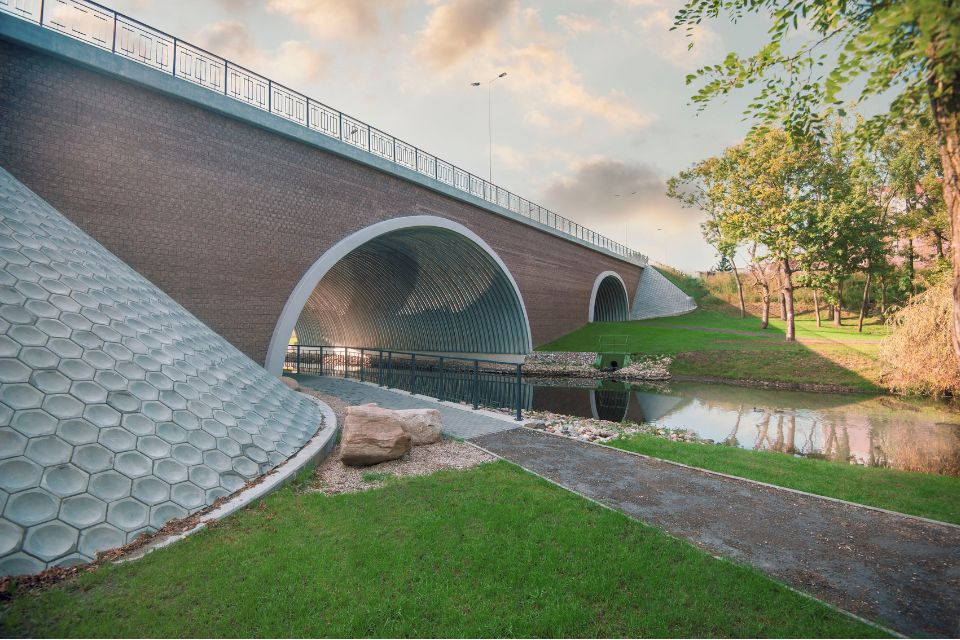
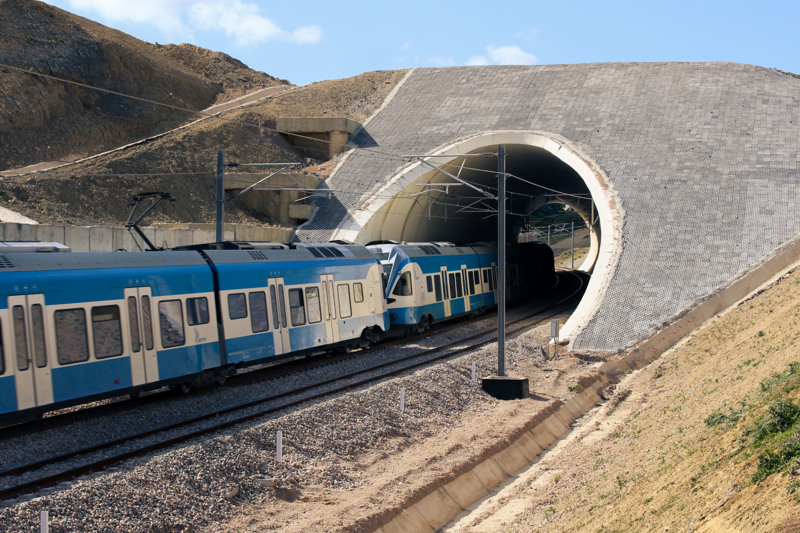

Track closures are costly and work windows are short. This article shares practical ways to deliver railway bridges and culverts on time with fewer closures and predictable installation, using modular steel and precast arch structures.
What this article covers
- When modular steel or precast is a good fit for railway applications
- Key design considerations
- A quick checklist for feasibility and specification
Why modular steel and precast work well for rail projects
Rail projects succeed or fail on the closure window. Prefabricated systems reduce unknowns on site and compress time in the corridor:
- Fast assembly reduces the required closure window for train traffic.
- Factory-controlled quality improves reliability versus in-situ casting.
- Repeatable installation sequences make planning and risk management simpler.
Two complementary ViaCon systems for rail
– ViaPlate (modular corrugated steel arches and pipes): Corrugated steel plates are bolted together on site to form arch or circular/elliptical profiles. Suitable for underpasses, overbridges and waterway culverts, especially where speed and limited access are critical. Also well suited to rehabilitating ageing bridges.
– ConSpan (precast concrete arches): Precast units are manufactured off site and lifted into place, giving precise geometry and rapid assembly during track closures.
Both systems are designed for the required load-bearing capacity and durability. They are configurable for rail clearance envelopes and can be integrated with ballast or slab track. They are used for renewals and new construction within the addressable market limited by geometry.
Design considerations that keep projects predictable
- Clearance and geometry: Confirm the rail clearance envelope early. Both systems offer configurable spans and rises to satisfy clearance and hydraulic capacity.
- Track bed interface: Define the interface with ballast or slab track (depths, transitions, waterproofing and drainage). Smooth transitions protect ride quality and reduce maintenance.
- Foundations and backfill: Select foundations and specify backfill parameters to suit the chosen system and ground conditions. Proper compaction and sequencing are critical to achieving design capacity.
- Temporary works and access: Plan crane pads, laydown areas and safe access routes before the closure window.
- Approvals and standards: Align designs with the relevant railway standards and Eurocodes and agree hold points with the asset owner.
Where these systems are a strong fit
- Waterway culverts and underpasses beneath rail embankments
- Renewal of ageing culverts/arches where full reconstruction is not required
- New overpasses above existing railway lines
- Wildlife and agricultural crossings integrated into rail corridors
Benefits at a glance
- Shorter closures and fewer disruptions to services
- Predictable installation windows and handovers
- Optimized total cost across build and maintenance
- Durable, low-maintenance structures designed for railway duty
Next step: request a feasibility review
If you have a site in mind, request a feasibility review. You’ll receive a recommended system (ViaPlate, ConSpan), a high-level sequence aligned to your closure window, and indicative programme considerations. So, you can plan with confidence and keep trains moving.
Frequently asked questions (short answers)
Both. The recommended system depends on the site’s geometry and access.
Prefabrication reduces installation time and heavy on-site works. Steel is recyclable and supports circularity at end of life. Precast solutions can incorporate low‑carbon mixes where available
Railway administrations and infrastructure owners, bridge designers and consulting engineers, and contractors delivering work in rail corridors.
